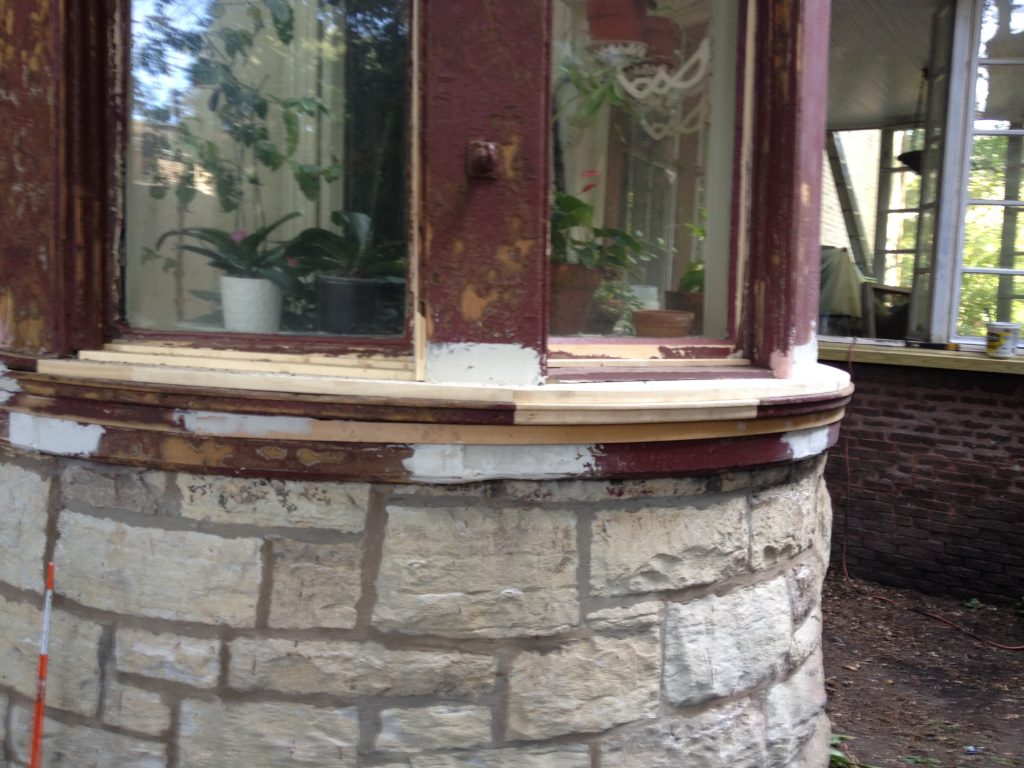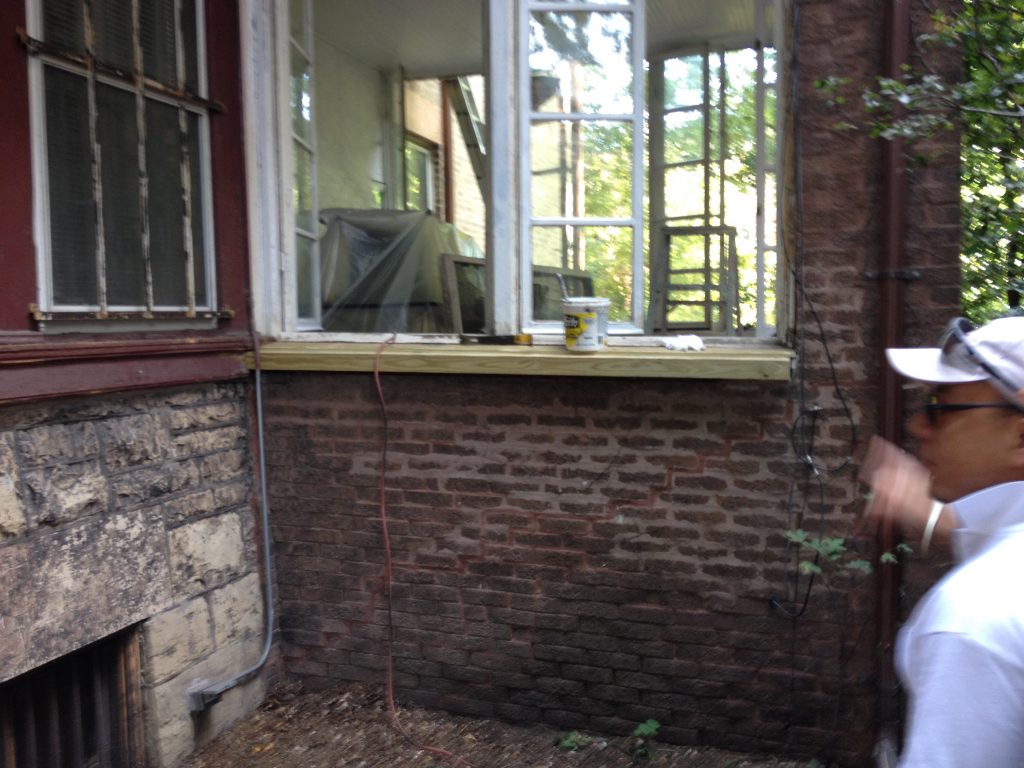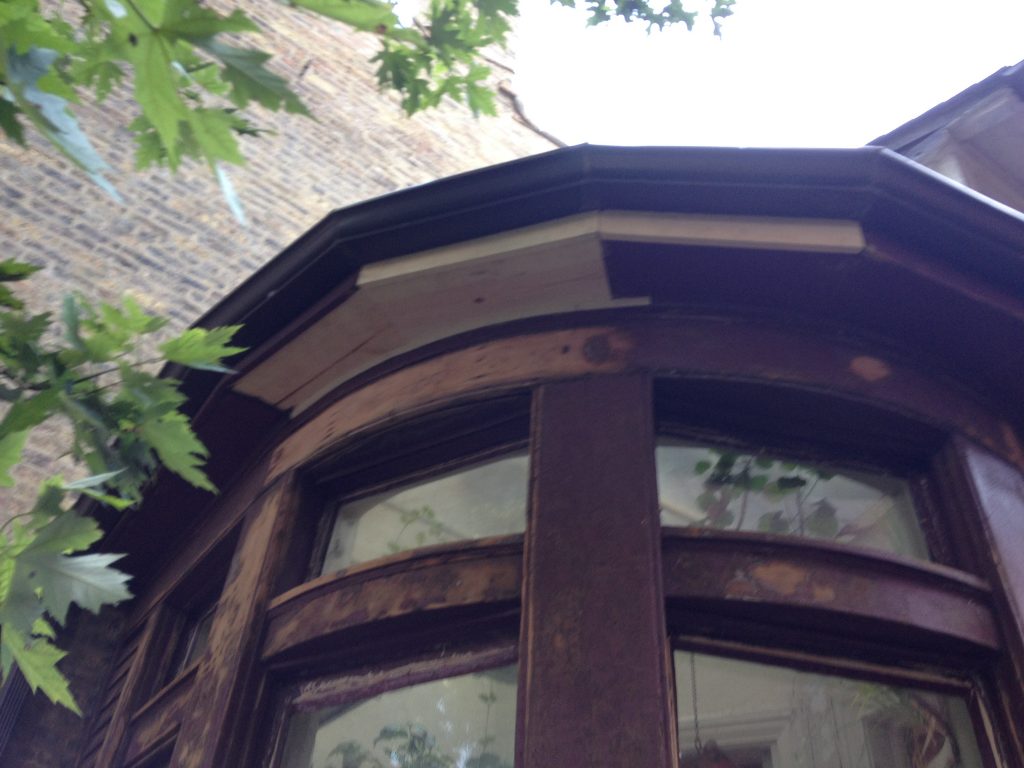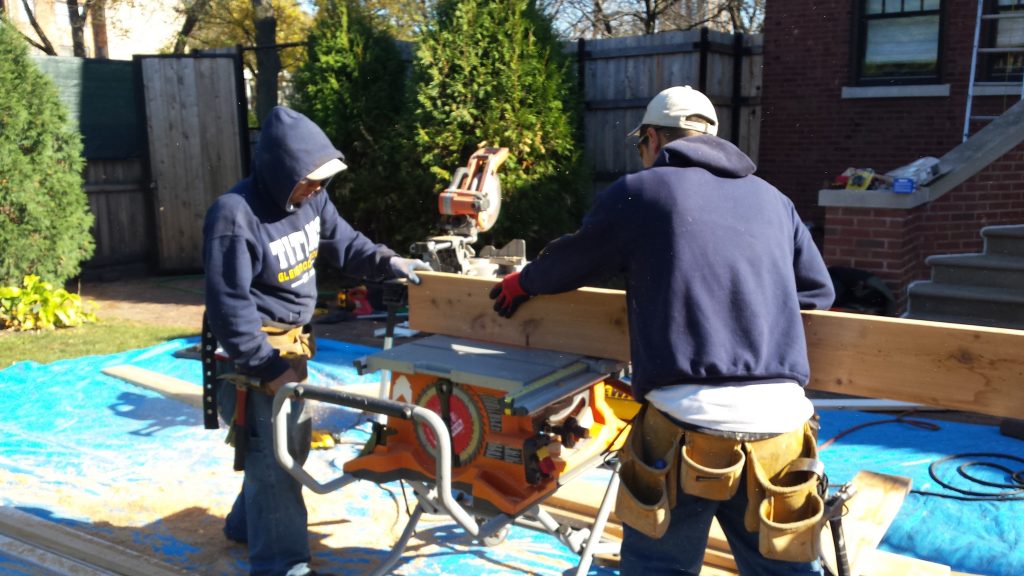

Custom Millwork in Chicago
Chicago’s architectural inheritance is built on woodwork. The deep cornices on Lincoln Park greystones. The intricate spindle work on Wicker Park Victorians. The Prairie-style art-glass cabinetry of Oak Park. The hand-turned newel posts in Hyde Park townhouses. When that woodwork is damaged, missing, or doesn’t match what came before, off-the-shelf trim from the lumberyard won’t bring it back. Custom millwork will.
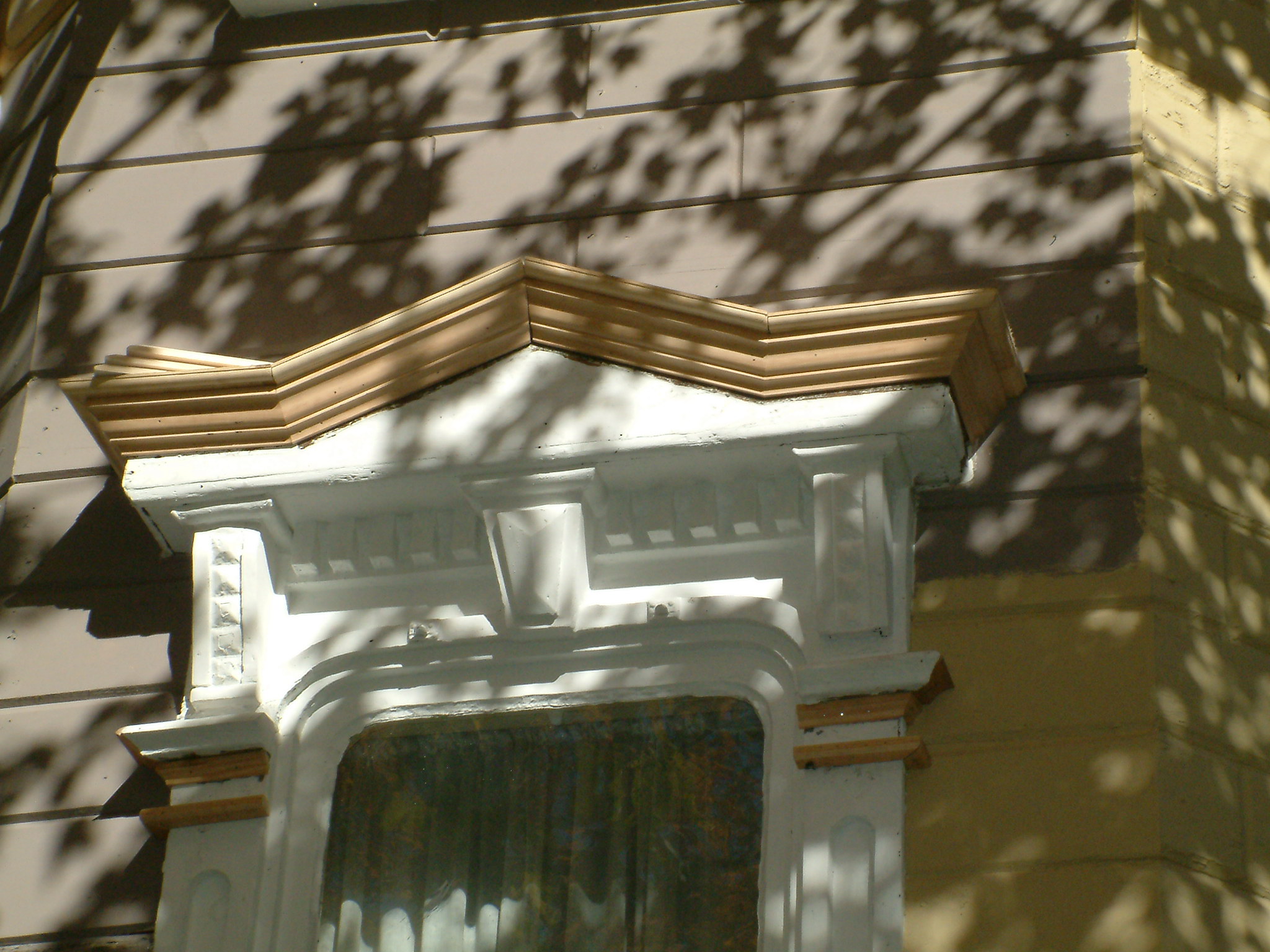
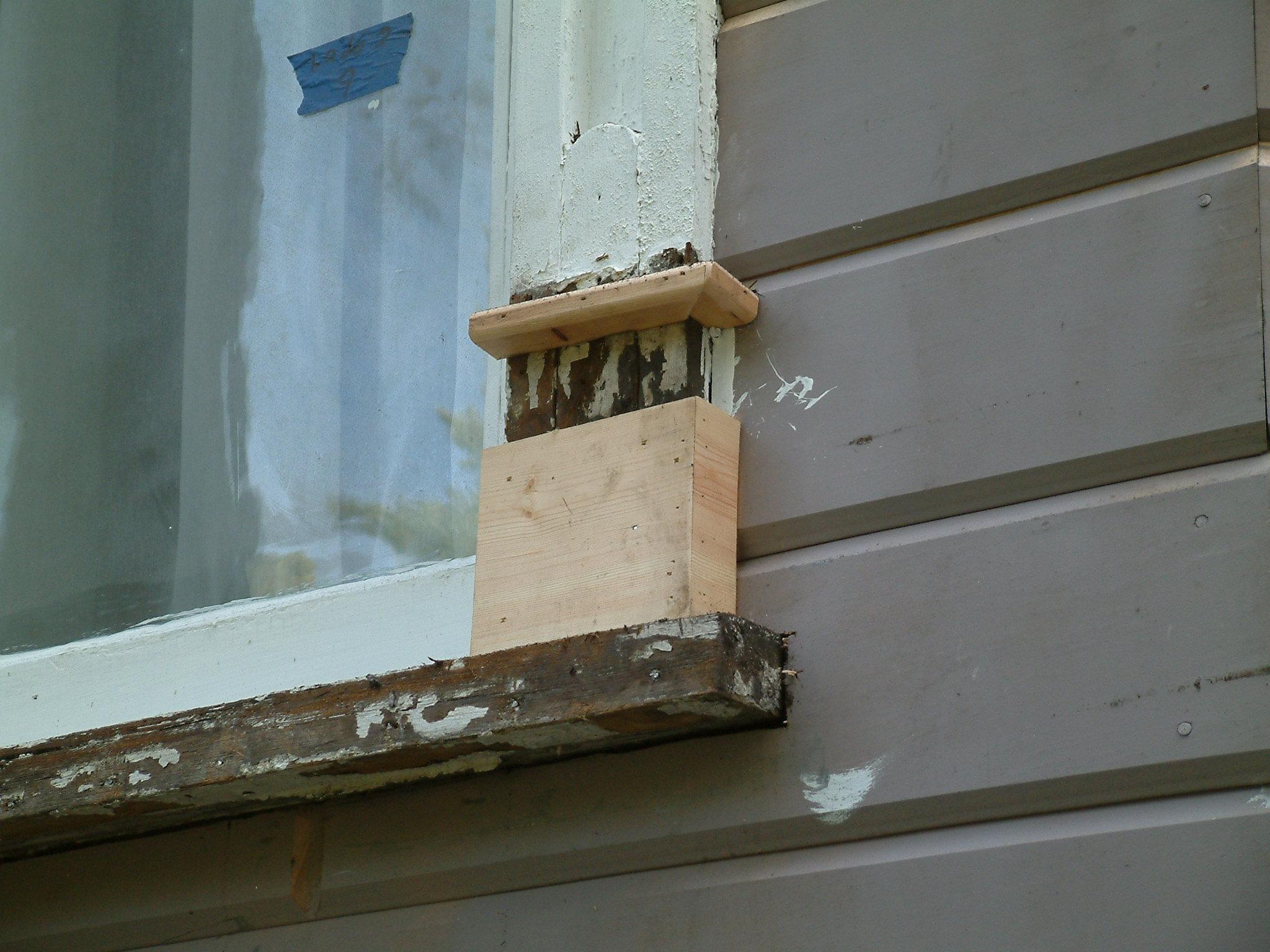
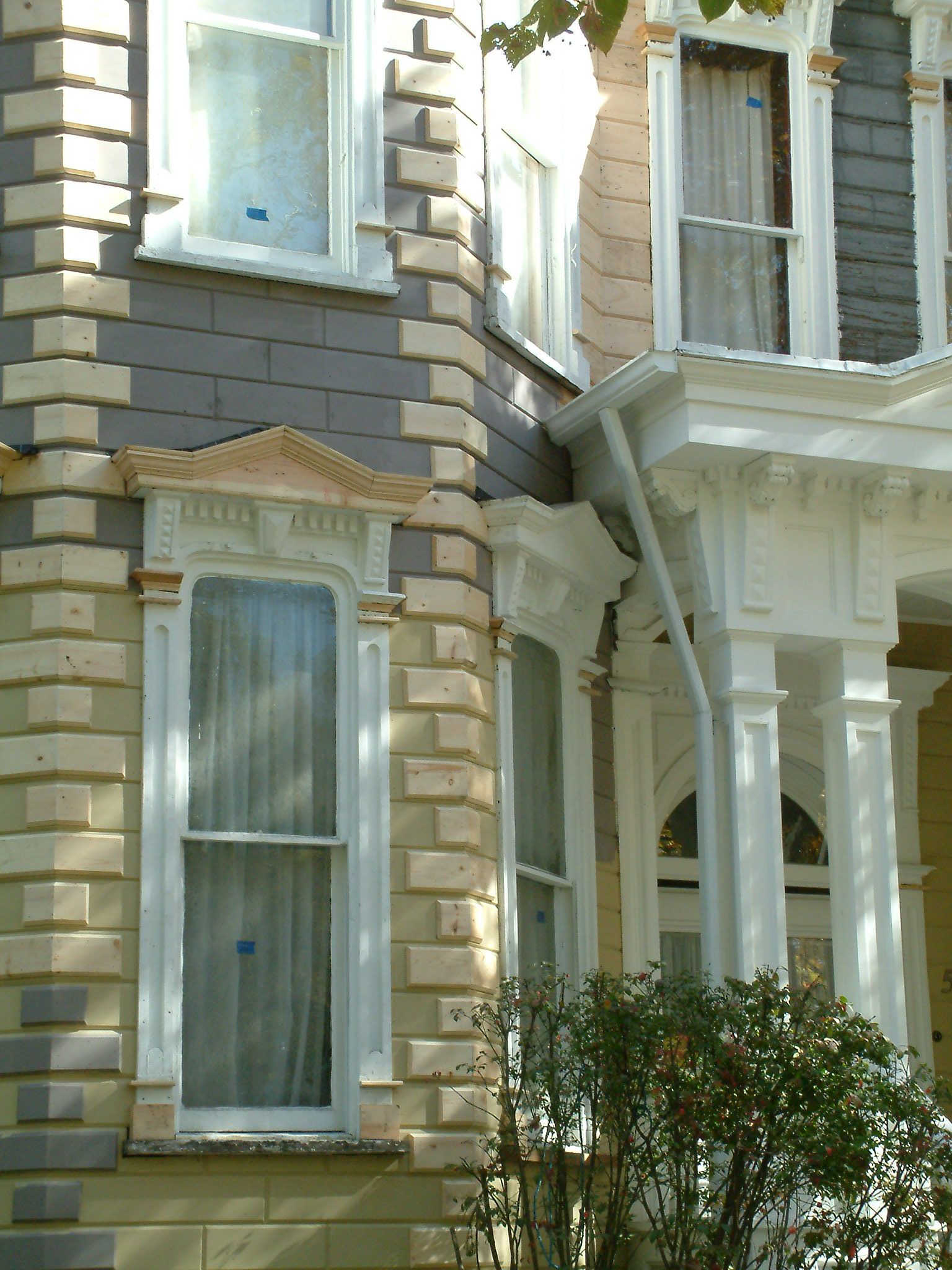
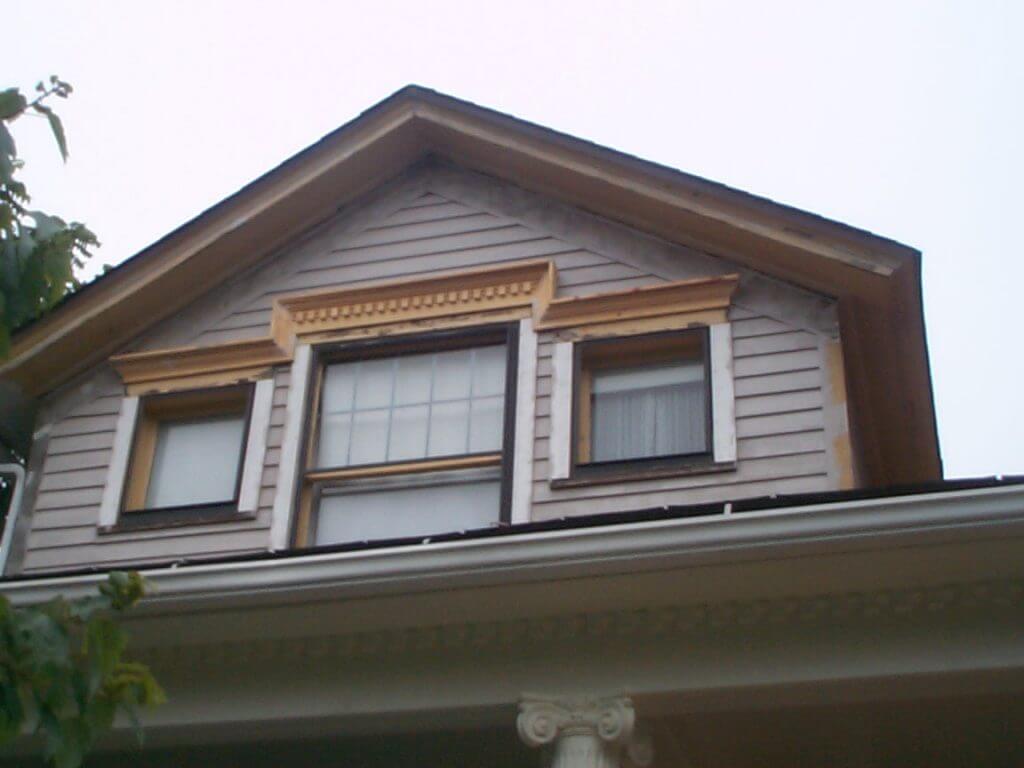
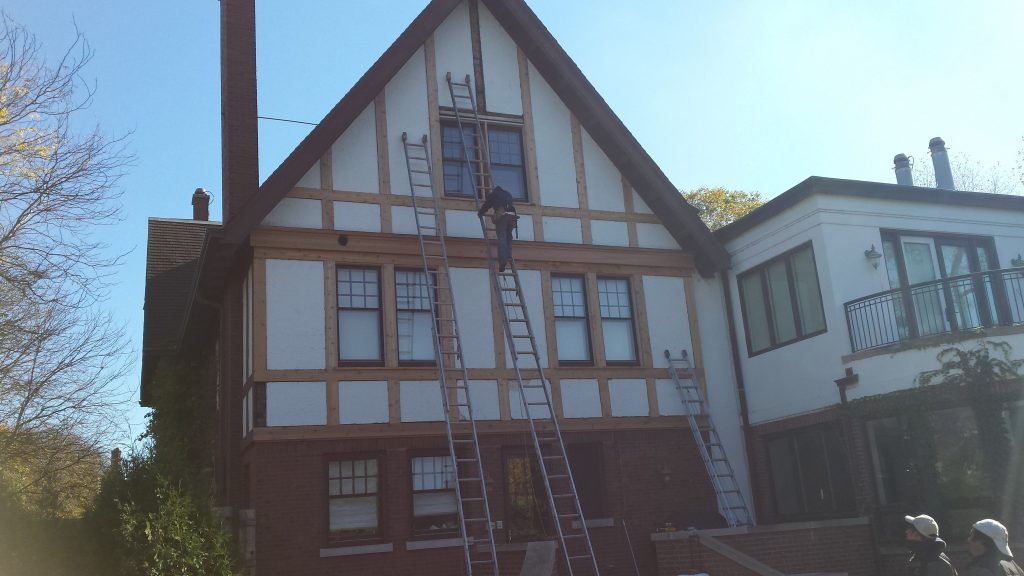
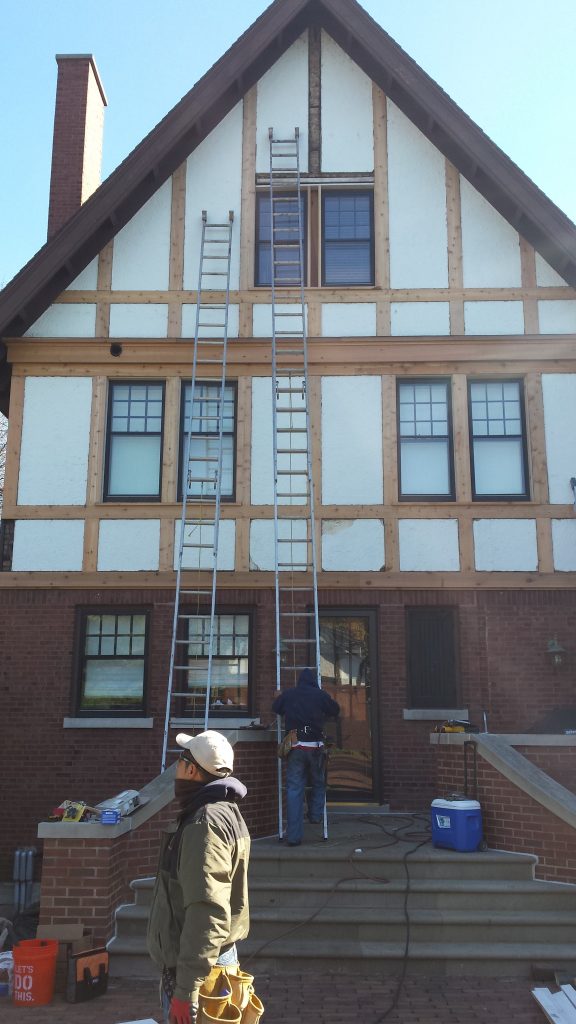
Fortune Restoration has been producing custom interior and exterior millwork for Chicagoland homes, churches, and landmark properties since 1979. Our master carpenters can replicate historic profiles, fabricate one-of-a-kind architectural elements, and integrate new woodwork seamlessly with existing original details — on everything from a single missing baluster to whole-house trim packages.
Request a free custom millwork estimate or call 847-647-2500.
What “Custom Millwork” Actually Means
“Custom millwork” is the term for any architectural woodwork that isn’t pulled off a shelf at the lumberyard — it’s milled, shaped, or fabricated specifically for a project. That can range from running a single matching length of crown molding to fabricating an entirely new staircase newel post from a hand-drawn profile.
The reason custom millwork matters is simple: historic homes weren’t built from standard catalogs. The mouldings on a 1905 Chicago two-flat were milled locally to whatever profile the builder, architect, or homeowner specified. The dentil spacing on a Queen Anne porch was set by the carpenter on site. The window casings on an Oak Park Prairie house were custom to that house. When those elements need to be repaired or replicated today, generic trim doesn’t fit the opening, doesn’t match the profile, and reads as wrong from across the room. The Architectural Woodwork Institute publishes the industry standards we work to on every custom project.
What We Fabricate
Interior Millwork
- Crown moldings, base moldings, chair rails, picture rails — matched to existing profiles or designed new
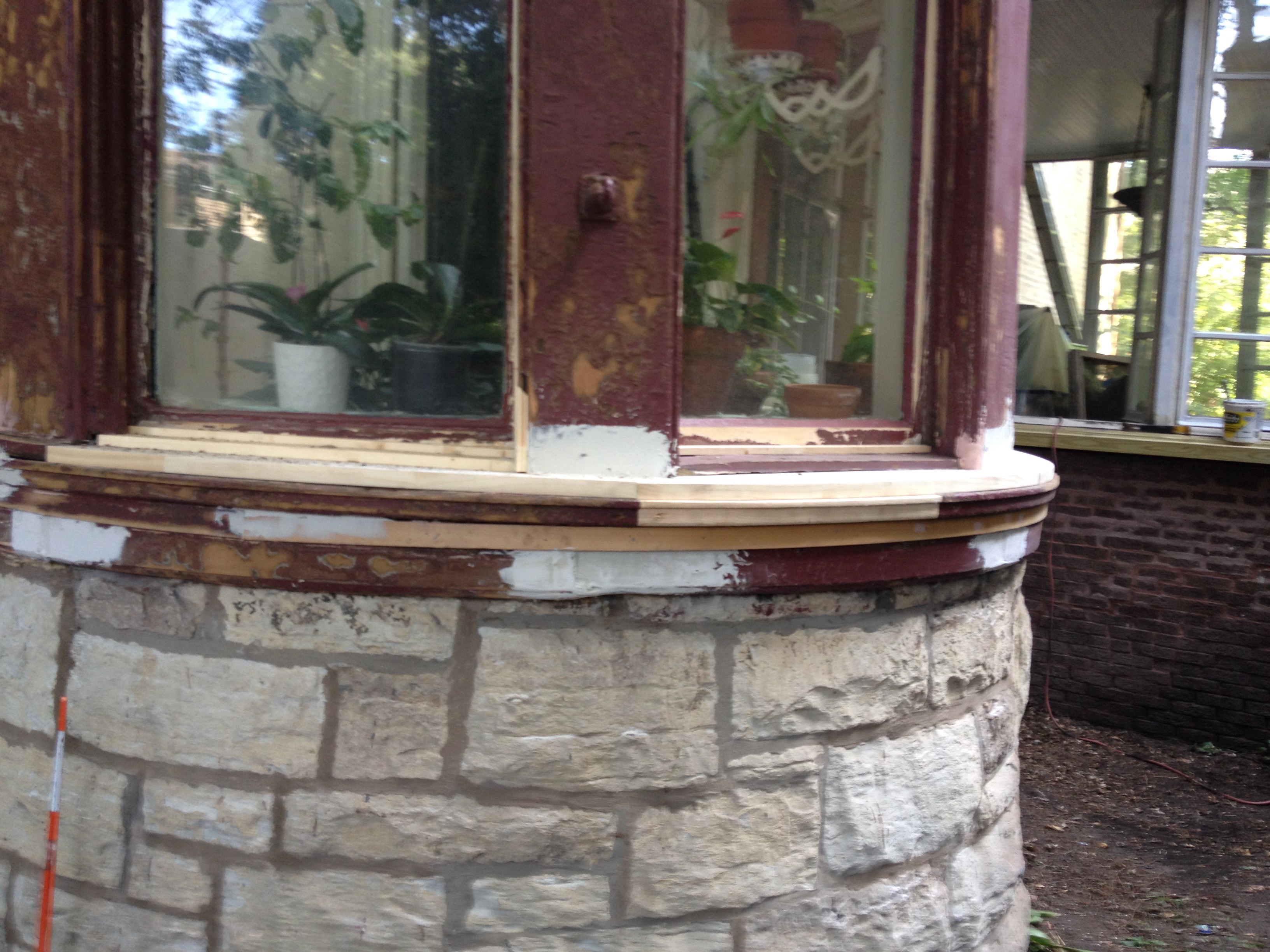
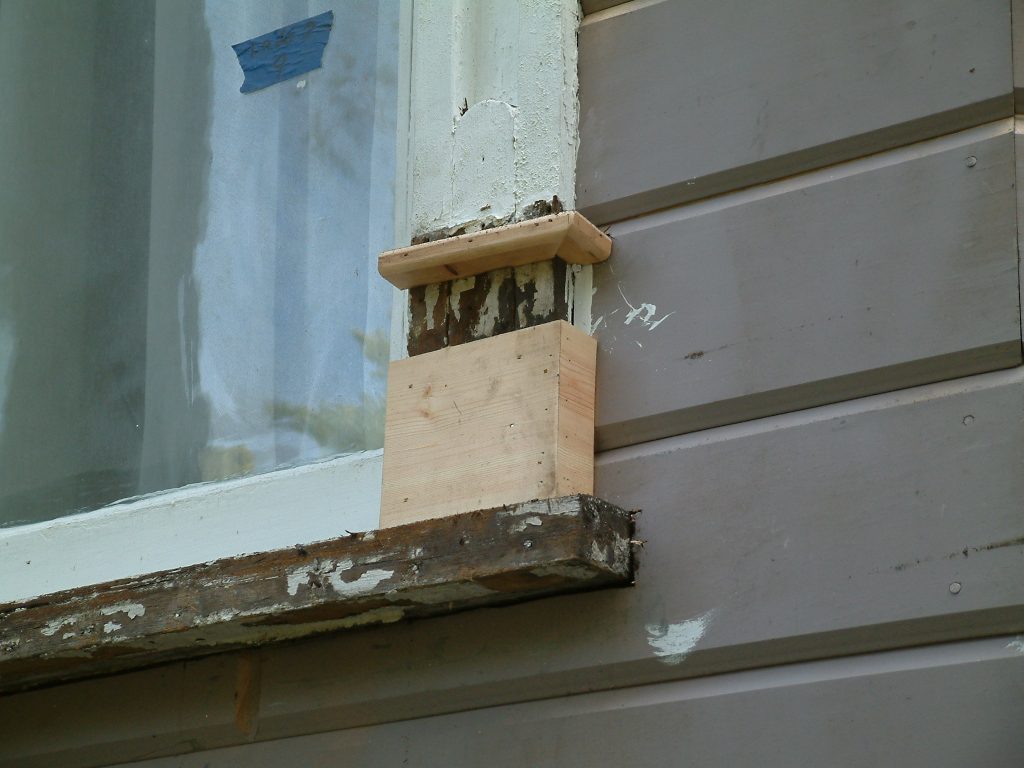
- Window and door casings, headers, and surrounds — including reproduction of historic profiles
- Wainscoting, paneling, and built-up trim assemblies
- Mantels and fireplace surrounds — from Federal-style overmantels to Prairie-school horizontal compositions
- Built-in bookcases, china cabinets, and benches — matched to home’s architectural period
- Staircase components — newel posts, balusters, handrails, treads, risers, and skirts
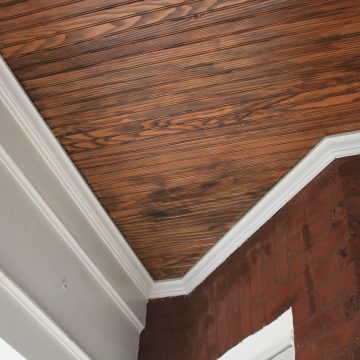
- Coffered and beamed ceilings — replication of historic ceiling assemblies
Exterior Millwork
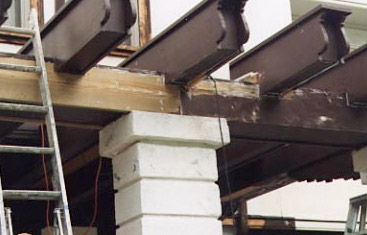
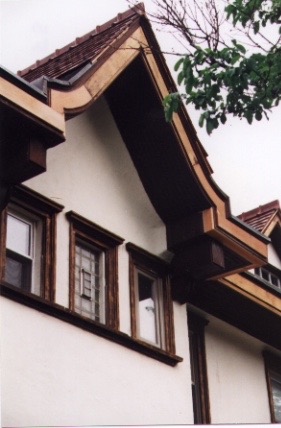
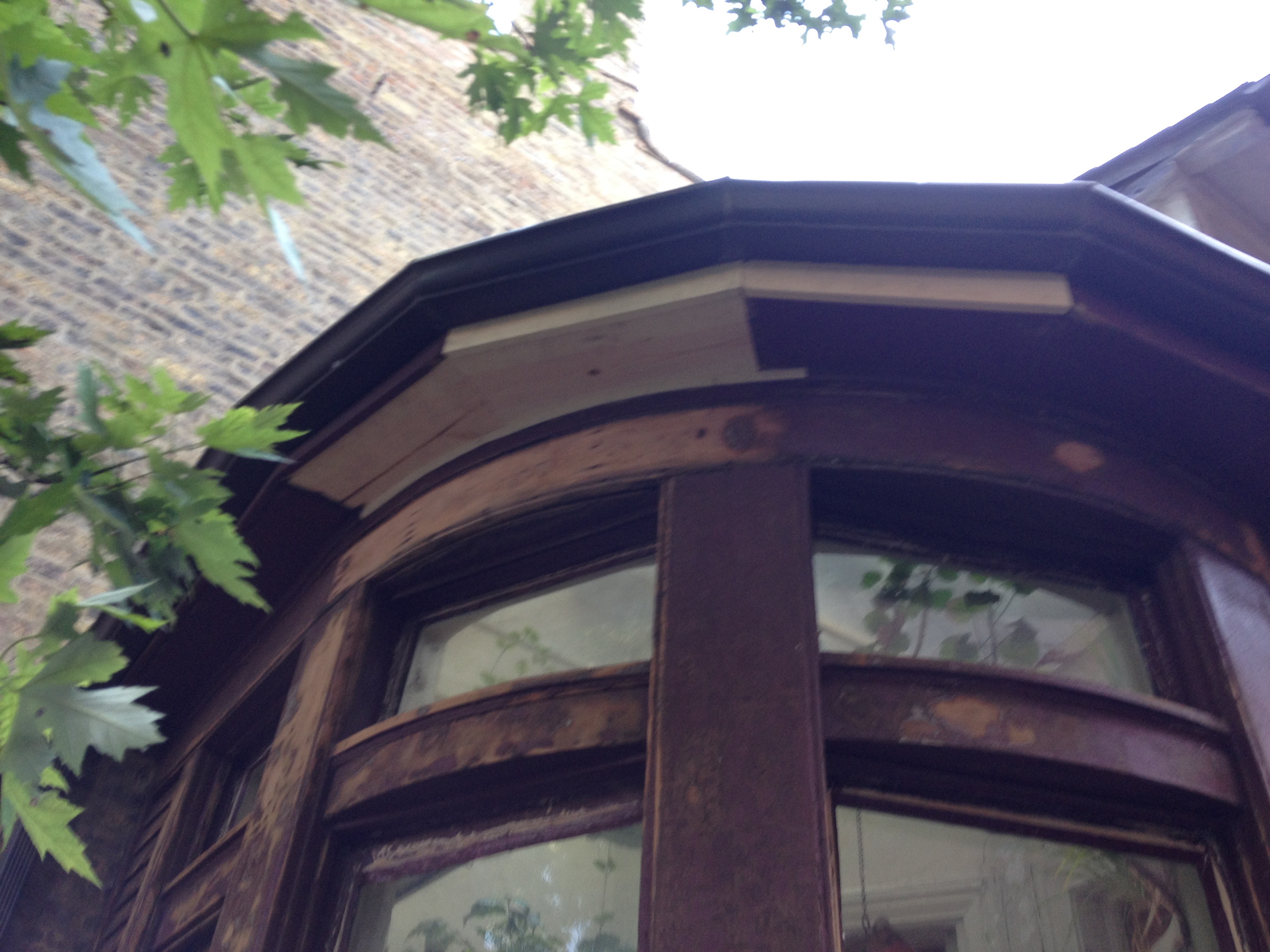
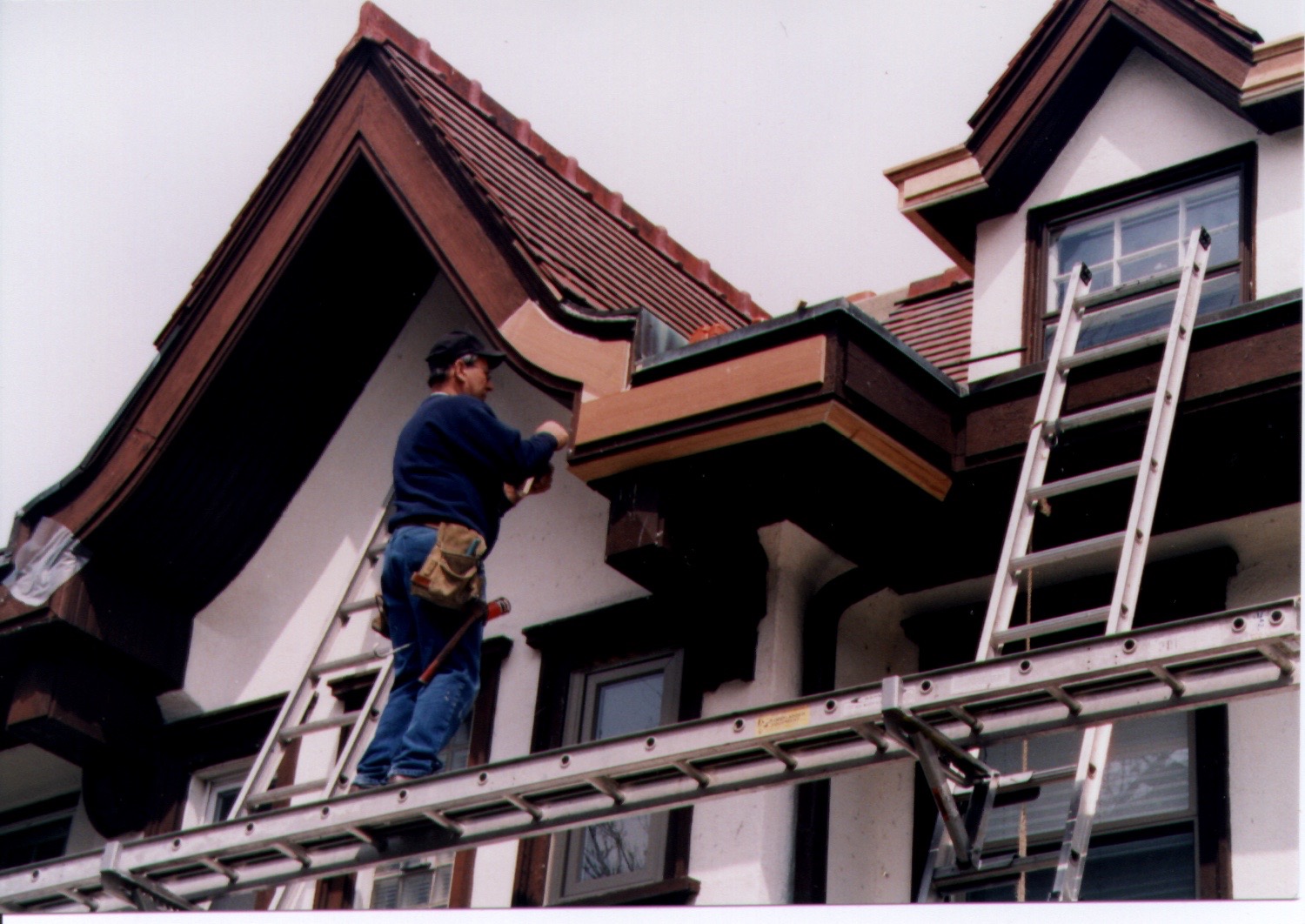
- Cornices, soffits, fascia, and frieze boards
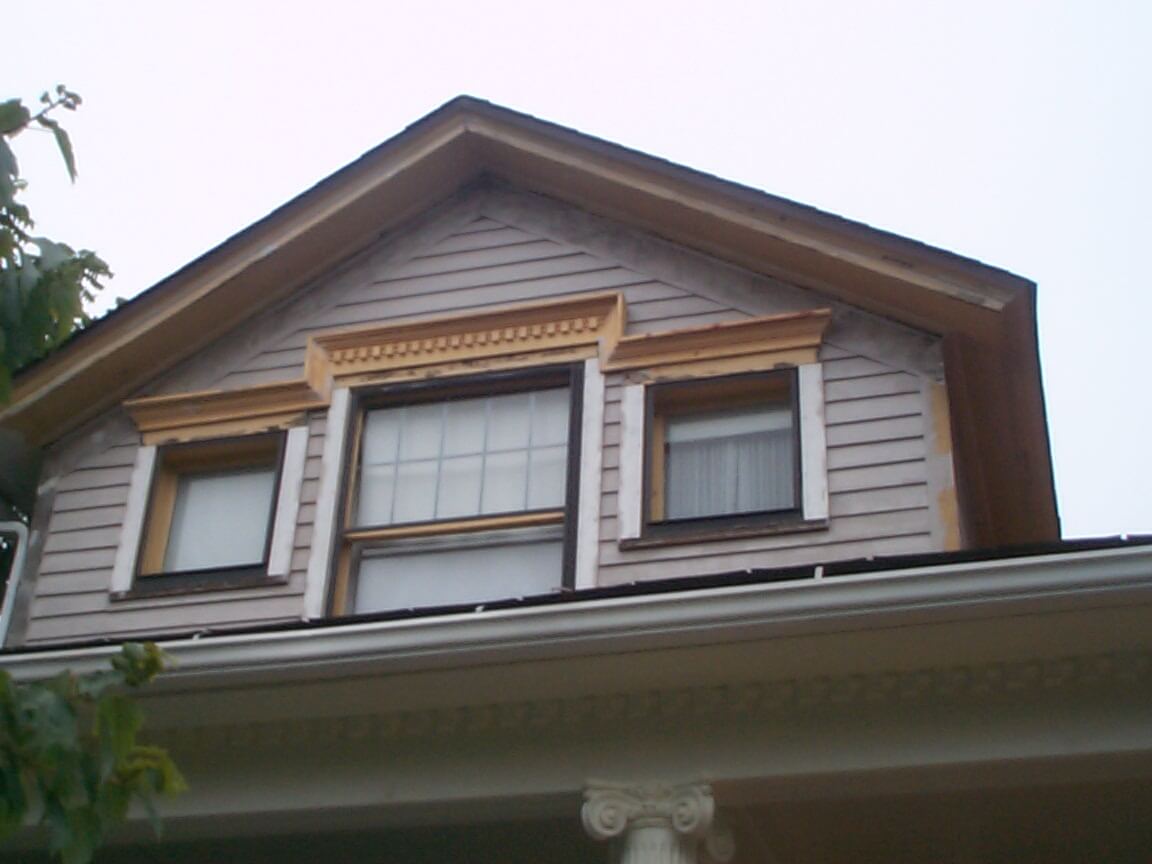
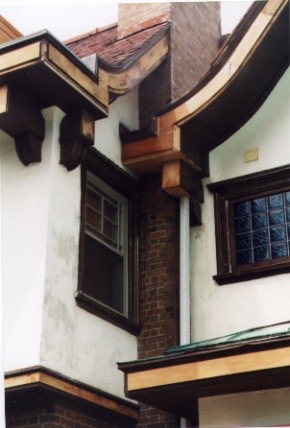
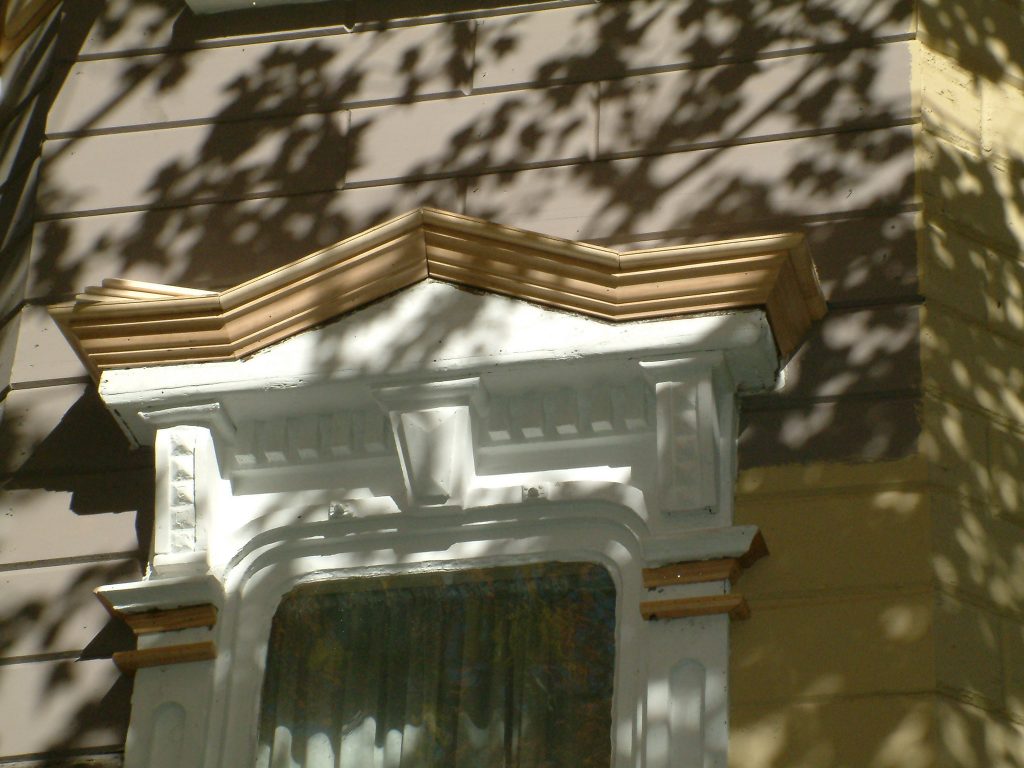
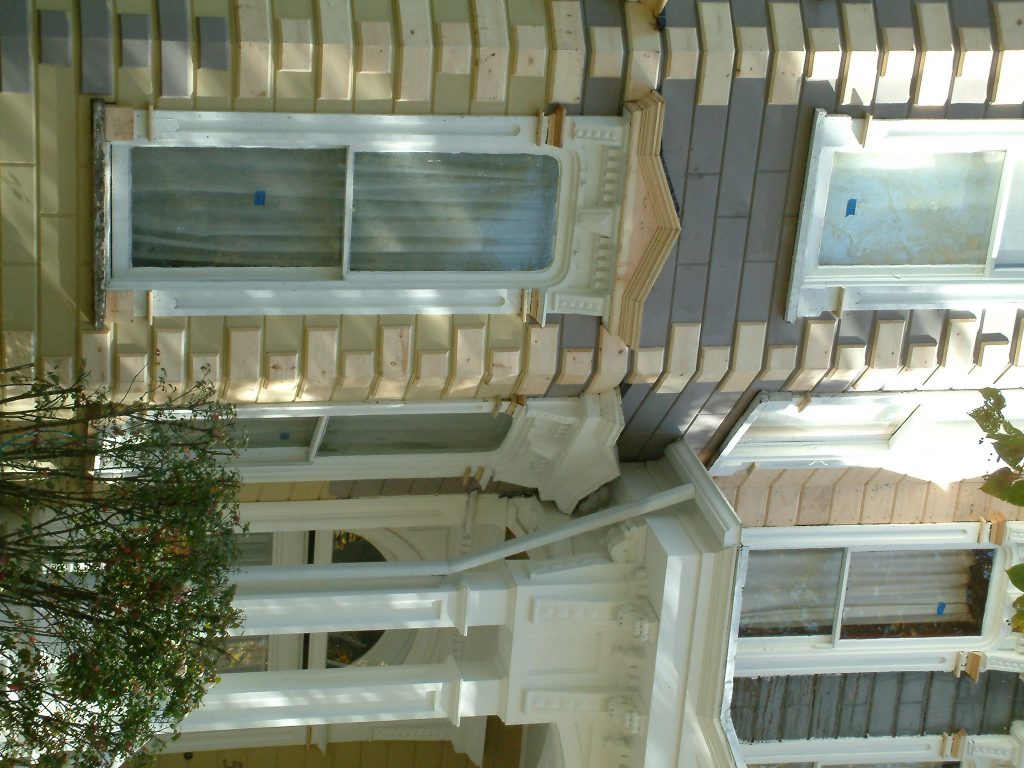
- Brackets, dentils, modillions, and corbels — the decorative elements that define Victorian, Italianate, and Queen Anne facades
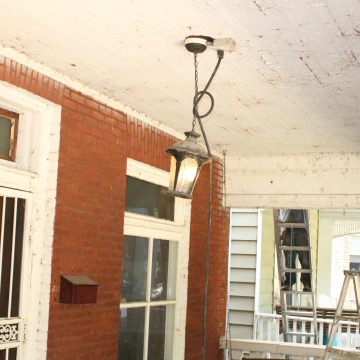
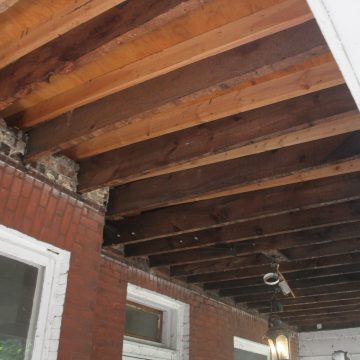
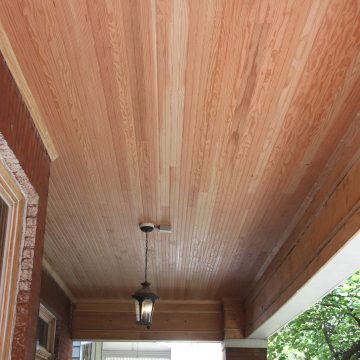
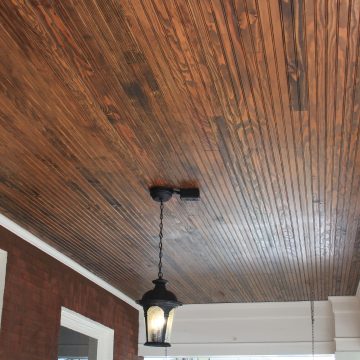
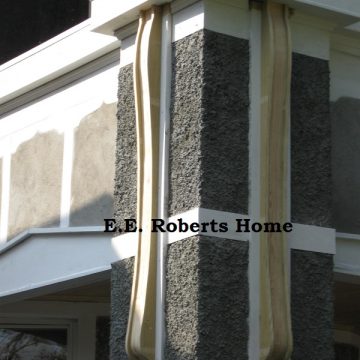
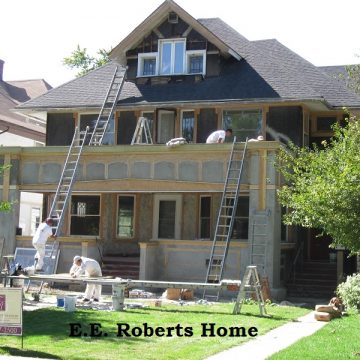
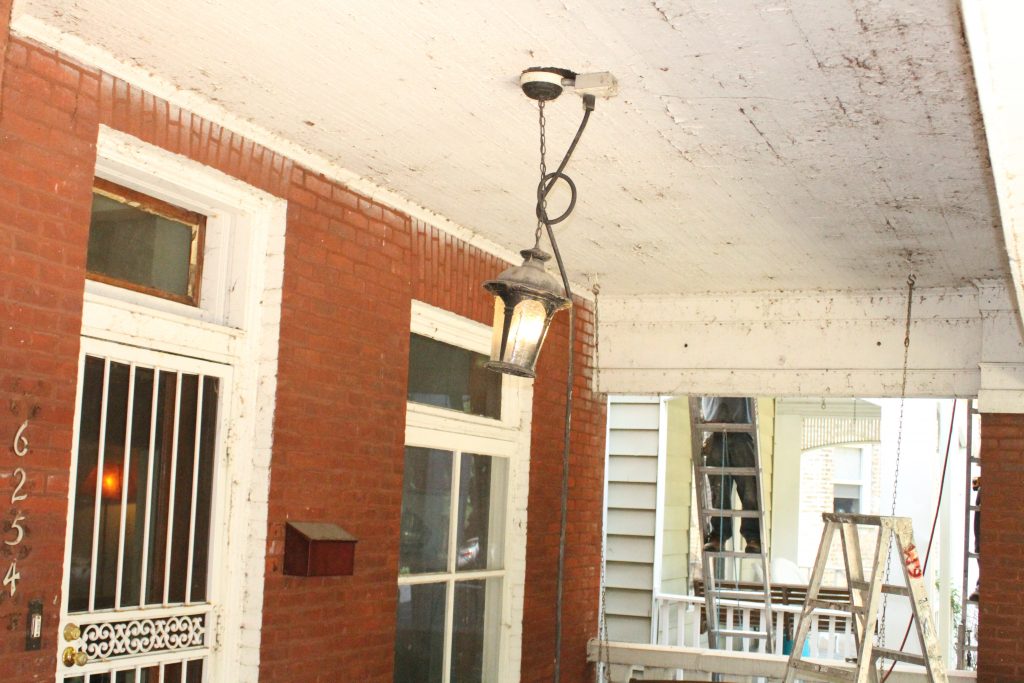
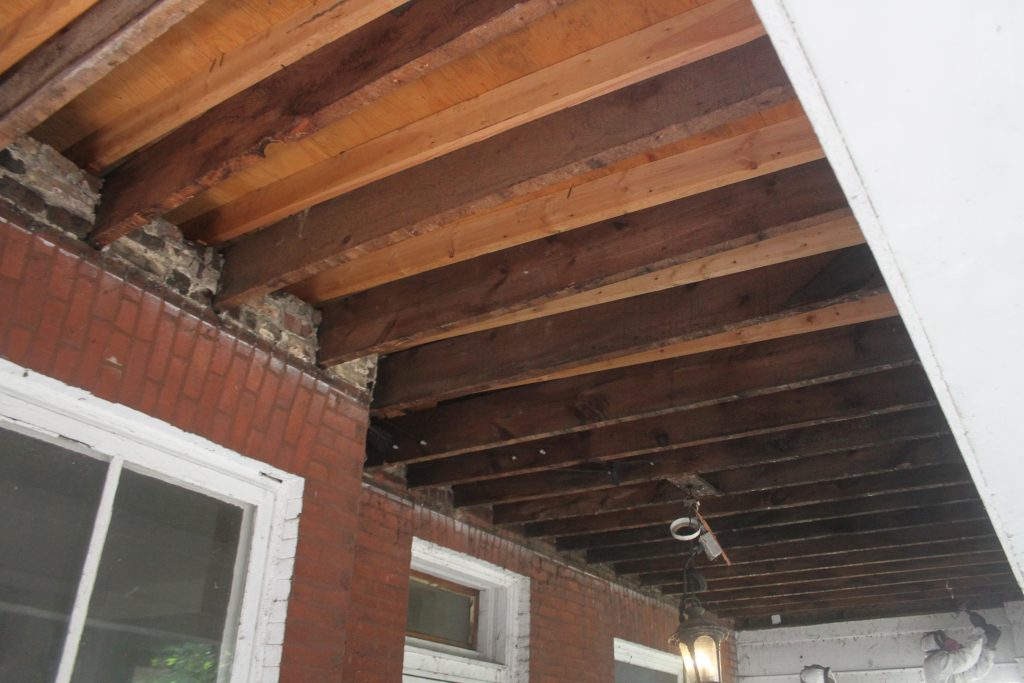
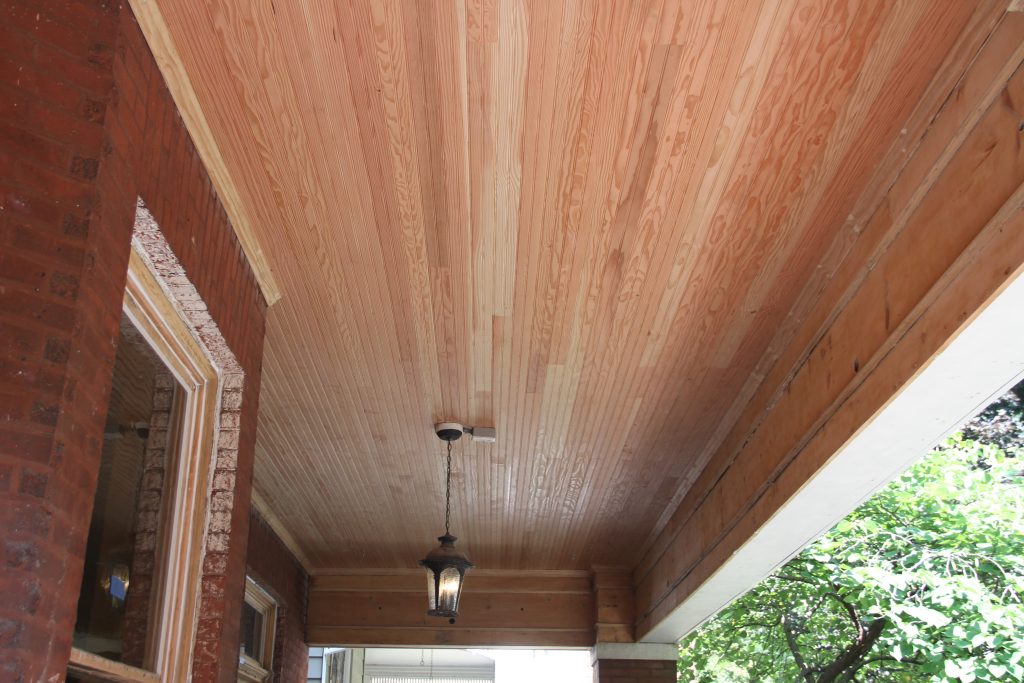
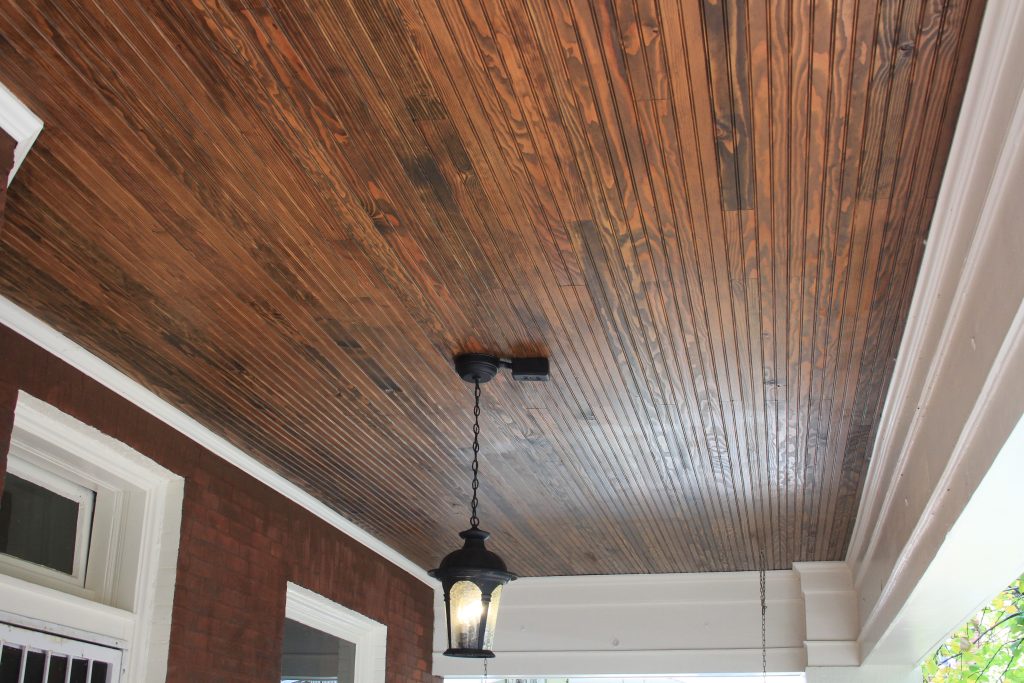
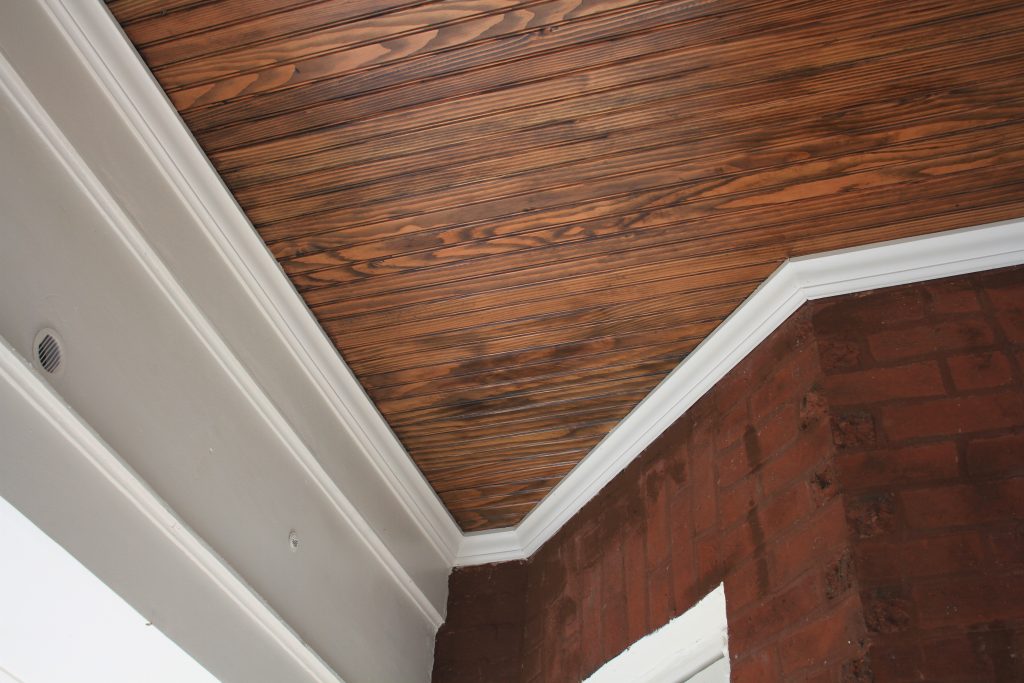
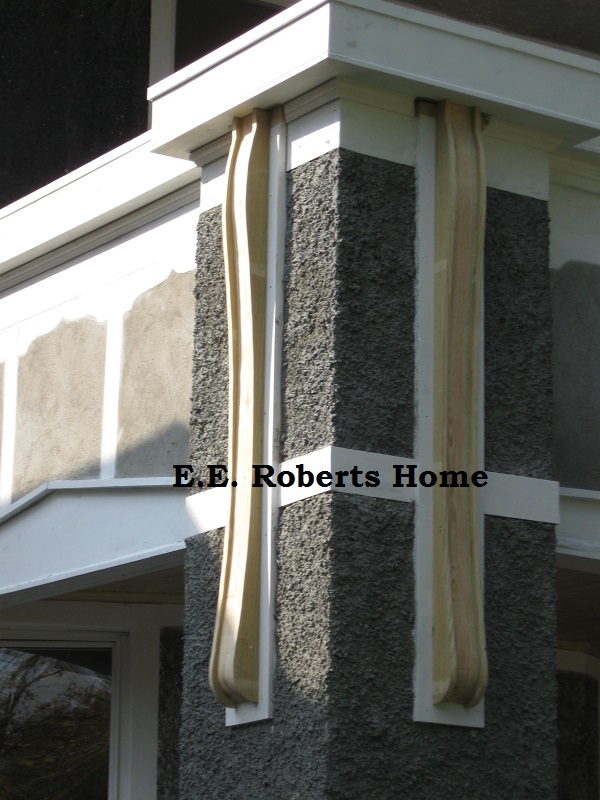
- Porch components — columns, capitals, balusters, railings, ceiling beadboard, and decorative spindles (often coordinated with our porch and deck restoration work, an approach aligned with the National Park Service’s preservation guidance on historic wood porches)
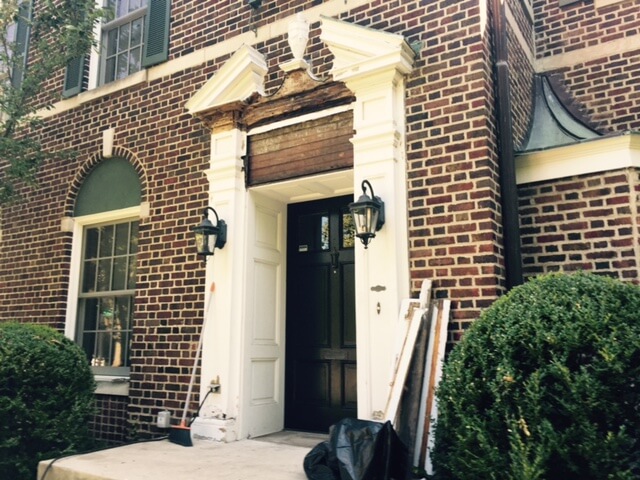
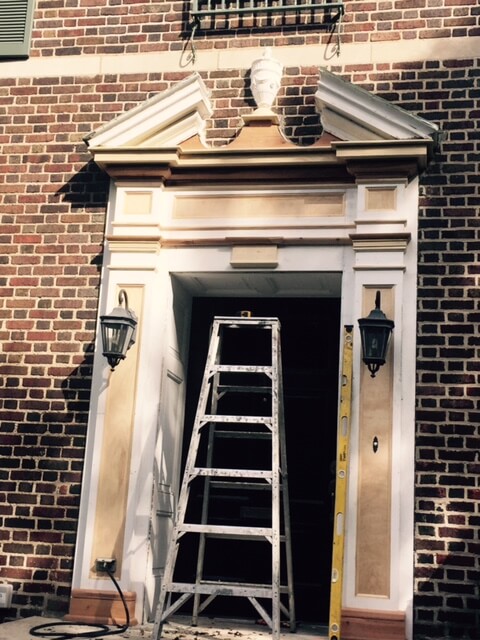
- Window surrounds, door surrounds, and entry pediments
- Custom shutters, doors, and window components for historic homes
- Decorative bargeboards, finials, and gable ornament
- Column restoration — including capital and base replication (see our dedicated column restoration service)
Matching Existing Profiles: How It Actually Works
The single most common custom millwork project is matching what’s already on the house. Our approach aligns with the principles outlined in the National Park Service’s preservation guidance on rehabilitating historic interiors — preserve original material wherever possible, and replace in kind only when necessary. The process:
- Profile capture. A short section of original molding is removed (carefully, to be reinstalled) or a contact gauge is used to trace the cross-section. For elements that can’t be removed — carved capitals, applied ornament — we work from detailed photographs and measurements.
- Pattern development. The captured profile is translated into a knife pattern (for run molding) or a template (for shaped elements). Tolerances matter: even a 1/16″ deviation in a complex profile reads as visibly different from across a room.
- Material selection. Same species, same grade, same grain orientation as the original wherever possible. Quarter-sawn oak originals are matched with quarter-sawn oak, not flat-grain.
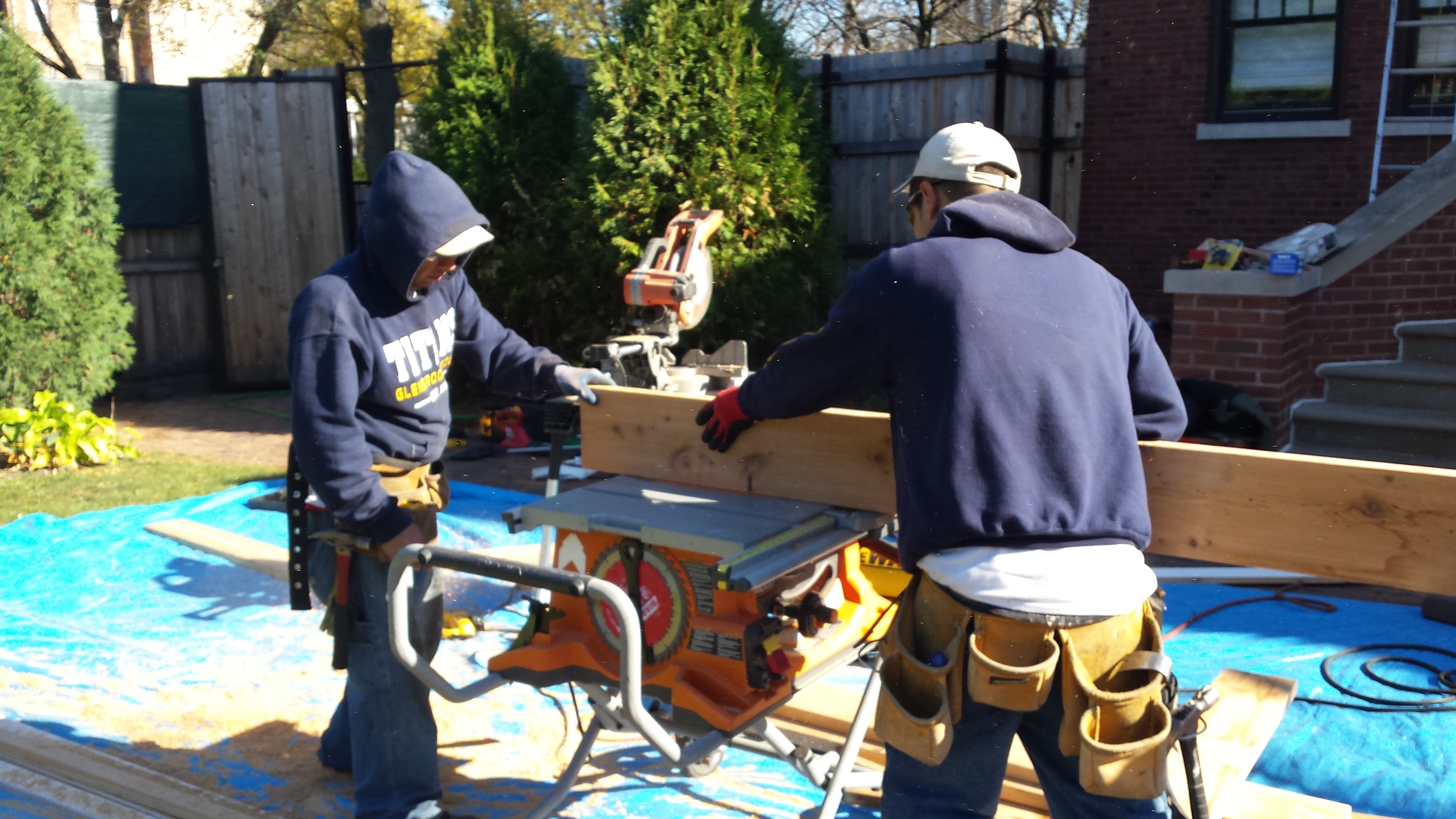
- Milling and shaping. The new pieces are run on shapers or moulders with the custom knives, then hand-finished where the original work shows hand-tooling.
- Installation and finishing. Installed in coordination with surrounding original work, then finished — painted, stained, or clear-coated — to integrate with the existing surfaces. For historic painted woodwork, we often pair installation with stripping and refinishing of adjacent original pieces, following the NPS preservation guidance on painting historic interiors.
Materials for Chicago’s Climate
Wood selection matters enormously, especially for exterior millwork that has to survive Chicago’s freeze-thaw cycles, UV exposure, and humidity swings:
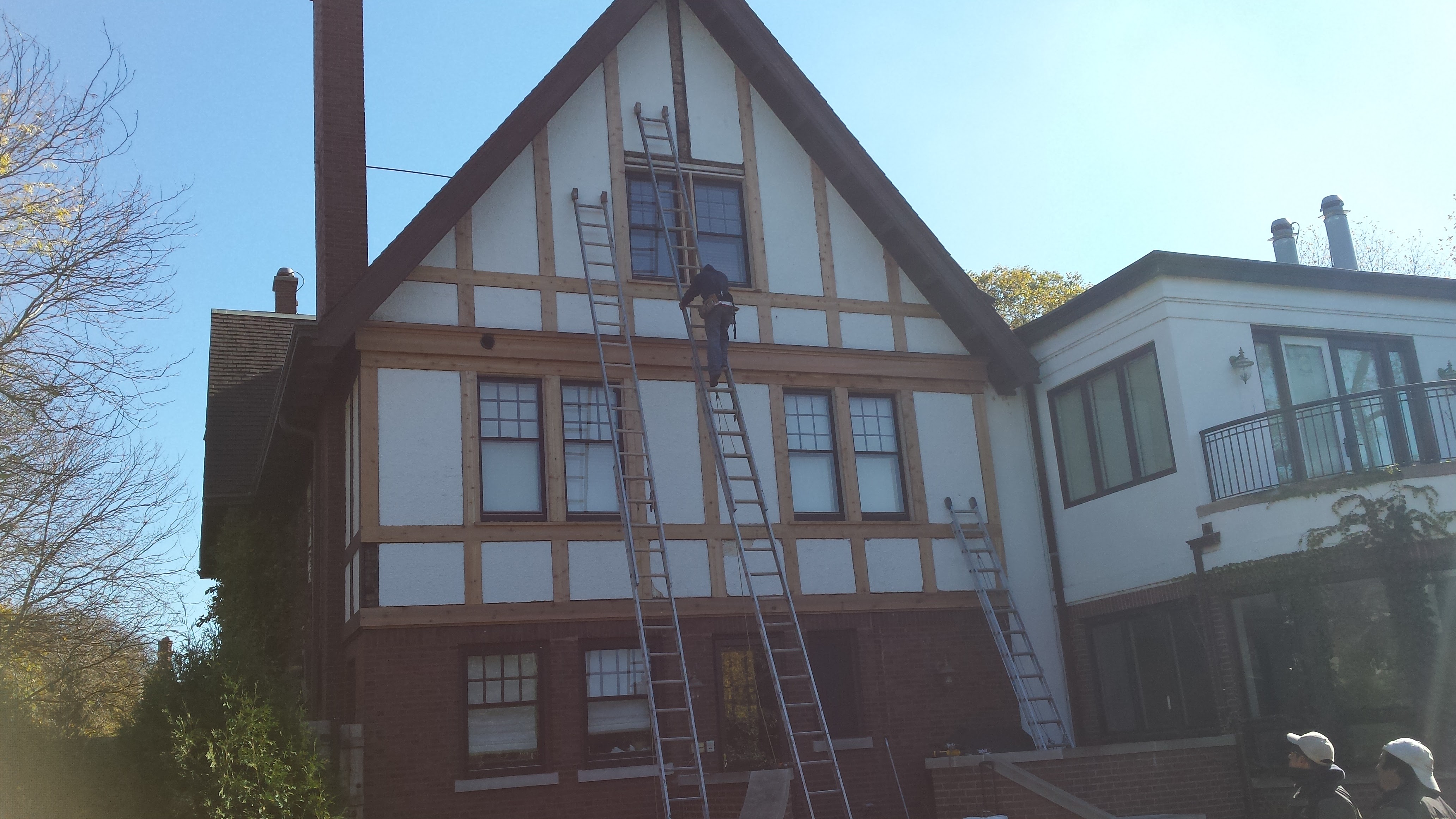
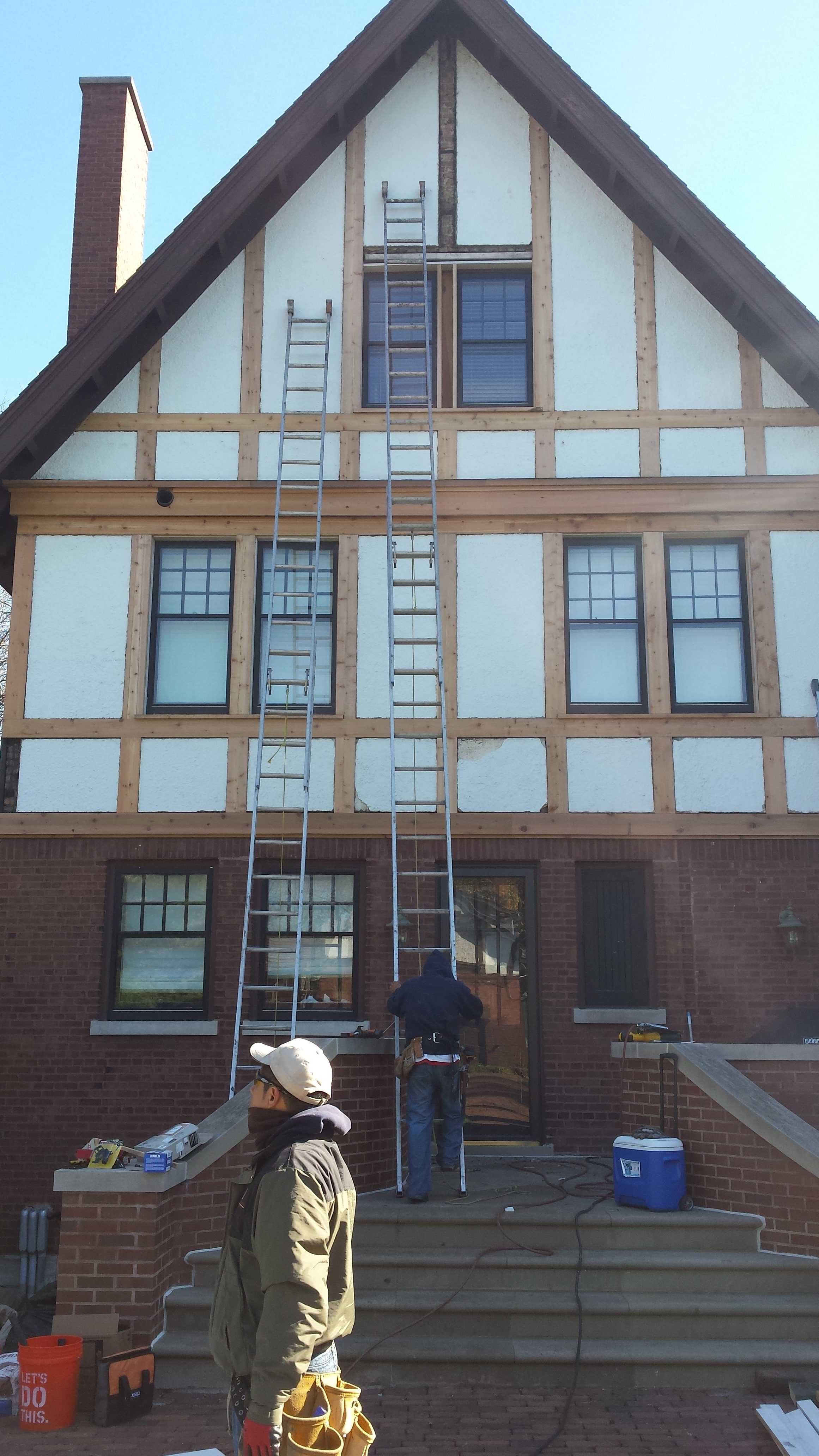
- Western Red Cedar — the standard choice for exterior decorative millwork. Naturally rot-resistant, stable, holds paint exceptionally well
- Clear vertical-grain Douglas Fir — the traditional choice for Prairie-style and Arts and Crafts work. More stable than flat-grain, takes stain beautifully
- Mahogany — premium hardwood for entry doors, surrounds, and high-end exterior detailing
- Quarter-sawn White Oak — the classic interior choice for Arts and Crafts and Prairie homes; also used historically on high-end exterior work
- Poplar — common for interior paint-grade millwork; stable, takes paint well, economical
- PVC and composite trim — appropriate for high-moisture exterior applications (fascia, rake board, areas in contact with masonry) where appearance allows; never appropriate as a visual substitute for grade-A wood on featured architectural elements
Notable Custom Millwork Projects
Custom millwork has been central to many of our most significant restoration projects, including:
- Frank Lloyd Wright homes in Oak Park — replication of original Prairie-style trim and built-ins
- Patterson-McCormick Mansion — interior and exterior decorative millwork
- Noble-Seymour-Crippen House in Norwood Park
- Chicago-area churches — pew ends, narthex woodwork, altar surrounds, decorative ceiling assemblies
- Victorian Painted Ladies across Chicago, Oak Park, and the North Shore — gingerbread, spindle work, and decorative bargeboards
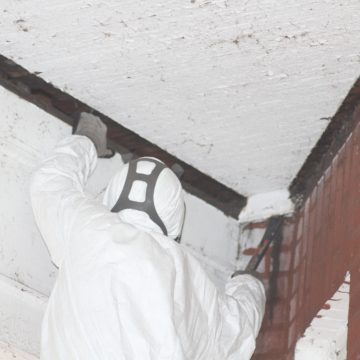
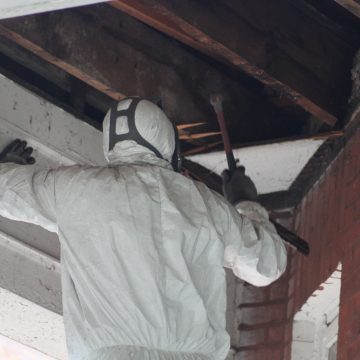
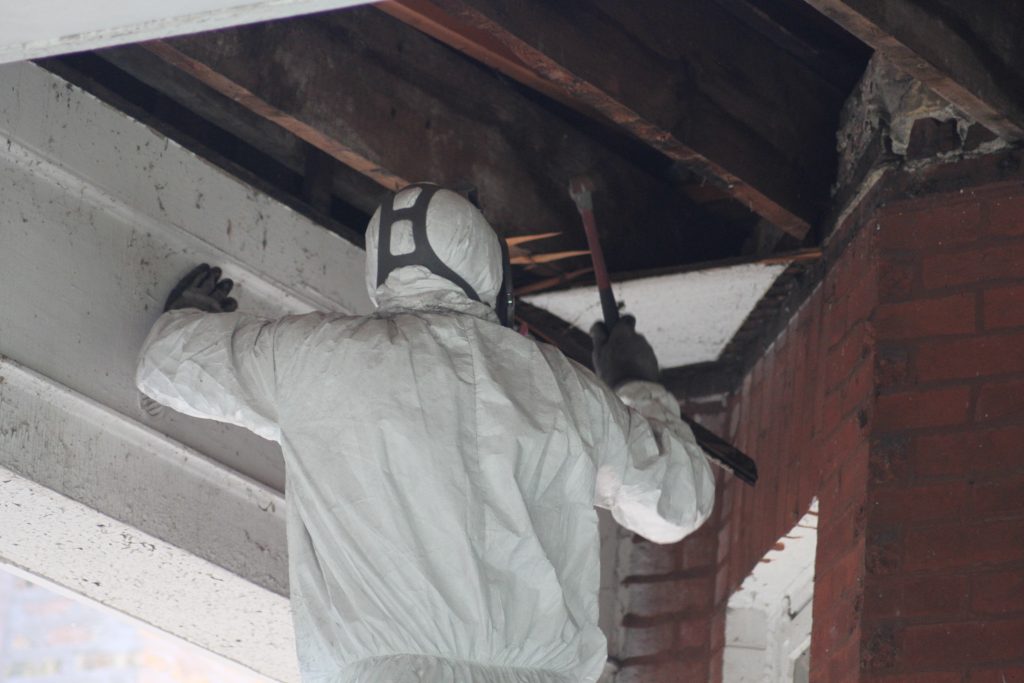
On any project that disturbs original painted woodwork in a pre-1978 home, we follow EPA Lead-Safe (RRP) protocols as standard practice — not as an upcharge.
Coordinating Custom Millwork With Other Trades
Custom millwork rarely stands alone. Most projects coordinate with:
- Exterior painting or interior painting — new millwork is painted or stained to integrate with existing finishes
- Wood stripping and refinishing — adjacent historic woodwork often needs to be stripped back before new pieces are installed
- Siding repair — rot or damage behind decorative trim is common and must be addressed first
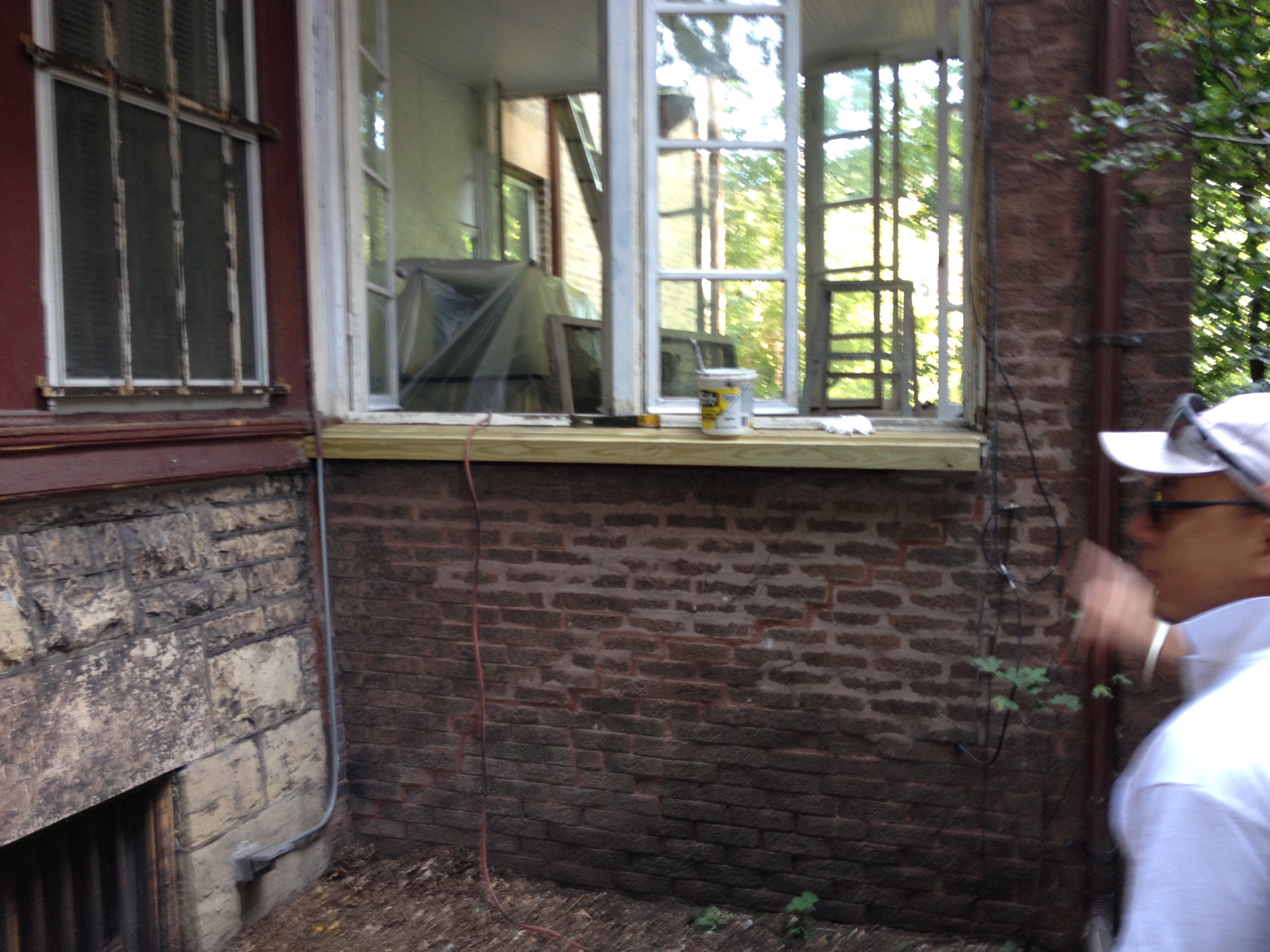
- Masonry work — on stone-trimmed openings, brick-and-wood interfaces, and historic facades where masonry and woodwork meet
- Historic landmark coordination — including landmark commission review where required
Service Area
Fortune Restoration provides custom millwork services throughout the Chicagoland area, with deep experience in historic neighborhoods:
Chicago (Lincoln Park, Wicker Park, Hyde Park, Lincoln Square, Beverly, Old Irving Park, Gold Coast) · Evanston · Wilmette · Winnetka · Kenilworth · Glencoe · Highland Park · Lake Forest · Oak Park · River Forest · Hinsdale · Lincolnwood · Skokie · Park Ridge · Glenview · Northbrook · Deerfield · Wheaton · Naperville
Why Property Owners Choose Fortune Restoration for Custom Millwork
- 47+ years of Chicagoland carpentry and historic restoration experience
- Master carpenters who can replicate complex historic profiles, not just install off-the-shelf trim
- In-house capabilities for profile capture, knife development, and custom milling
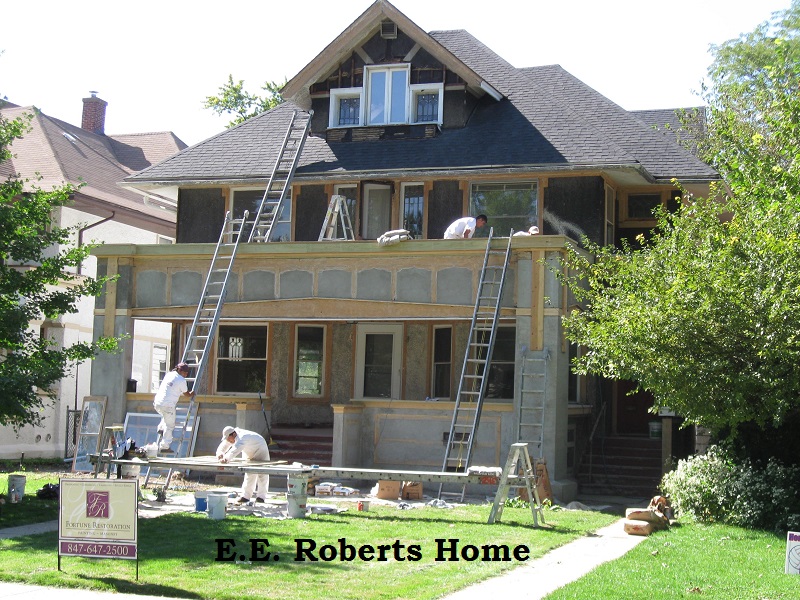
- Multi-trade coordination — we handle the surrounding painting, stripping, siding, and masonry work that custom millwork projects typically involve, all under one contractor
- Landmark-property experience — trusted on Frank Lloyd Wright homes, Chicago landmark properties, and significant churches
- EPA Lead-Safe (RRP) certified for work that disturbs original painted woodwork on pre-1978 properties
- Licensed, bonded, and insured in the State of Illinois
Frequently Asked Questions
What exactly is custom millwork?
Custom millwork is any architectural woodwork that isn’t pulled from a standard catalog — it’s milled, shaped, or fabricated specifically for a project. This includes matching existing historic profiles, designing new architectural details, and producing one-of-a-kind elements like newel posts, decorative brackets, paneling, mantels, and built-in cabinetry. It covers both interior and exterior applications.
When do I need custom millwork instead of off-the-shelf trim?
When the existing woodwork on your home doesn’t match anything available at standard lumberyards or millwork suppliers — which is true of most homes built before about 1940 in Chicago. If you can hold a piece of original molding from your house next to a sample from the lumberyard and the profile is different, you need custom work. Matching matters because mismatched profiles read as visibly wrong from across a room.
Can you match existing architectural profiles in my home?
Yes — this is the most common custom millwork request we handle. We capture the existing profile (either by removing a small section of original molding for reference, or by using contact gauges to trace the cross-section), translate it into a custom knife or template, mill the new pieces in matching species and grain orientation, and install them to integrate seamlessly with the original work.
What kinds of wood are best for custom exterior millwork in Chicago?
Western Red Cedar is the standard choice — naturally rot-resistant, stable through freeze-thaw cycles, and excellent paint adhesion. Clear vertical-grain Douglas Fir is the traditional choice for Prairie and Arts and Crafts homes. Mahogany is the premium option for high-end exterior elements like entry doors and surrounds. Pine and spruce are not appropriate for exterior decorative millwork in Chicago’s climate — they fail too quickly.
How long does custom millwork take to produce and install?
It varies dramatically with scope. A short matching length of running molding might be milled and installed in a week. A custom newel post, hand-turned to match an original, can take 2–4 weeks. A whole-house custom trim package on a major restoration can run 3–6 months from profile capture through installation. We provide specific timelines with every written estimate.
Is custom millwork worth the cost compared to standard trim?
For architecturally significant homes, yes — without question. On a 1910 Chicago greystone or an Oak Park Prairie house, installing mismatched off-the-shelf trim actively decreases the value of the home compared to matching original profiles. Custom millwork preserves the architectural integrity that makes these homes valuable in the first place. For modest builder-grade homes without significant architectural character, off-the-shelf trim is usually the better economic call.
Do you handle both interior and exterior custom millwork?
Yes. Our scope covers everything from interior mantels, built-ins, and trim packages to exterior cornices, porch components, brackets, columns, and decorative facade elements. Many projects involve both — for example, a Victorian restoration might include matching exterior gingerbread and interior staircase components in a single coordinated scope.
Need custom millwork for your Chicago-area home or building?
Call 847-647-2500 · Email sales@fortunerestoration.net · Request a Free Estimate